Affiliate note: Some links in this guide are affiliate links. If you buy or claim through them, The Finer Route may earn a commission at no extra cost to you. This is a practical travel guide, not security advice: follow your government's travel advice and your airline's instructions.
If you are flying to, through or over the Middle East this autumn, the picture has changed quickly. Attacks on Saudi airports in October led to thousands of cancellations, governments renewed their strongest warnings for Iran and several neighbors, and detours around closed airspace are adding time to flights between Europe and Asia. At the same time, the big Gulf hubs of Dubai, Doha and Abu Dhabi are largely running. Here is what that means for your trip.
Update, October 27, 2026: Riyadh's King Khalid International Airport partially reopened on October 25 for domestic and limited international flights after weeks of disruption. Several airlines have extended Saudi route suspensions into November or beyond. Check every flight on your itinerary before you leave home.
Quick answer
- Do not travel (US Level 4): Iran, Iraq, Lebanon, Syria and Yemen.
- Reconsider travel (US Level 3): Saudi Arabia, Israel, Qatar, the UAE, Bahrain, Jordan, Kuwait and Oman.
- Saudi Arabia: about 86% of scheduled Riyadh flights were cancelled between October 8 and 25; service is restarting gradually.
- Gulf hubs: Dubai, Doha and Abu Dhabi are operating, mostly with delays rather than cancellations.
- Your rights: refund or rerouting and care are owed; cash compensation usually is not, because security events count as extraordinary circumstances.
Government Travel Advice by Country
The US State Department updated its advisories for 13 Middle Eastern countries on October 23, 2026. The UK, Canada and Australia take a similar line on Iran.
| Level | Countries | What it means for travelers |
|---|---|---|
| Level 4: Do Not Travel | Iran, Iraq, Lebanon, Syria, Yemen | Do not go. Most travel insurance will not cover trips here. |
| Level 3: Reconsider Travel | Saudi Arabia, Israel, Qatar, UAE, Bahrain, Jordan, Kuwait, Oman | Travel is possible, but plan for cancellations and check your insurance. |
Iran: the US, UK, Canada and Australia all advise against all travel, citing armed conflict and the risk of wrongful detention. Lufthansa and Austrian Airlines suspended their Tehran flights, and other airlines run reduced schedules that can change without notice.
Saudi Arabia: What Happened and What Is Running
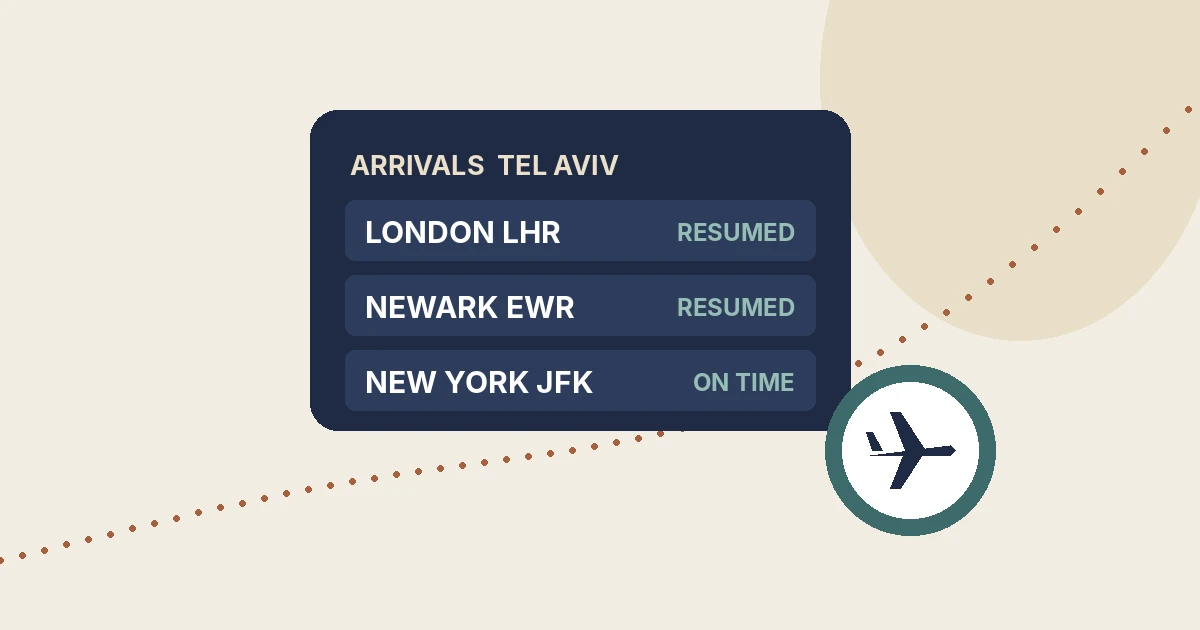
Attacks attributed to Yemen's Houthi movement hit Saudi airport infrastructure in October. At Riyadh's King Khalid International Airport, 4,071 of 4,736 scheduled flights were cancelled between October 8 and 25, and Dammam, Abha and Najran were also hit by cancellations. Dammam resumed flights after an attack on October 21, and Riyadh partially reopened on October 25.
- Etihad extended several Saudi route cancellations into November 2026.
- flydubai suspended several Saudi services until at least October 29.
- Cathay Pacific suspended Riyadh flights until January 31, 2027.
- Saudia, Air Arabia and others reported delays and cancellations without fixed restart dates.
Connecting through Riyadh? Confirm every leg, not just the first one. If the connection is on separate tickets, consider moving the whole trip onto one booking so the airline is responsible for rebooking you.
Gulf Hubs: Dubai, Doha and Abu Dhabi
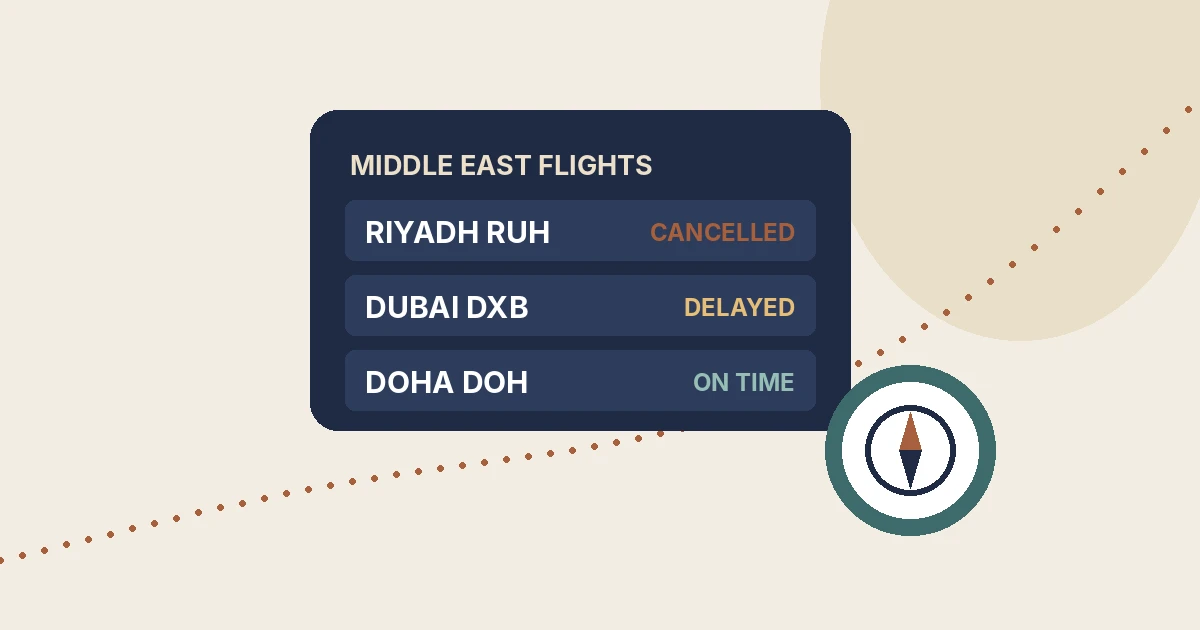
The three big Gulf hubs are open and handling most of their flights. A snapshot on October 23 showed Dubai with 213 delays and 11 cancellations, Abu Dhabi with 116 delays and 4 cancellations, and Doha with 101 delays and 1 cancellation. In practice that means delays are common, cancellations are rare.
The bigger issue is time. Airspace restrictions are pushing flights around the region, over Egypt, Saudi Arabia or Oman, and these detours add roughly 45 to 90 minutes to many flights. Some London to Dubai flights have taken up to two hours longer, which can knock on to onward departures to India, Southeast Asia and Australia.
- Allow at least 3 hours for connections in the Gulf this autumn.
- Pack medication, a charger and a change of clothes in your carry-on in case you are rerouted.
- If you are going on to Israel, see which airlines are flying to Israel.
Your Rights If Your Flight Is Cancelled
For flights from the EU, or on EU airlines, EU Regulation 261 gives you a choice between a refund and rerouting, plus meals, drinks and a hotel while you wait. Airspace closures and attacks are treated as extraordinary circumstances, so cash compensation of 250 to 600 euros is usually not owed. The care and refund rights still apply. UK rules work the same way for UK departures and UK airlines. On US airlines, the US Department of Transportation requires a cash refund if the airline cancels and you choose not to travel.
- Do not cancel the booking yourself; wait for the airline to cancel.
- Keep receipts for meals, hotels and transport.
- Ask for the cancellation reason in writing.
- If a delay on a separate, non-security flight caused a missed connection, compensation may still be due. AirHelp or Compensair can check for free.
Travel Insurance: Read the Exclusions
This is where many travelers get caught. Most policies exclude war, terrorism and civil unrest, and many will not cover a trip to a country where your government advises against all travel. Some cover extra costs from cancellations if you bought the policy before the event was known. Before you buy, check the war and terrorism exclusions, the government-warning clause and whether airspace closures count as a covered reason for a delay or cancellation. Our travel insurance guide explains what to look for, or compare a quote from EKTA.
Middle East Travel Checklist
- Government advice checked for every country on the route, including transit
- All flights on one ticket where possible
- Airline alerts turned on
- At least 3 hours for Gulf connections
- Insurance exclusions read before buying
- US citizens: enrolled in STEP for embassy alerts
- Essentials and medication in your carry-on
Flight already cancelled? Follow our first 30 minutes plan and read what to do if you miss a connection.
FAQ
Is it safe to fly through Dubai or Doha right now?
Dubai, Doha and Abu Dhabi were operating in late October 2026, mostly with delays rather than cancellations. The US rates the UAE and Qatar at Level 3: Reconsider Travel. Check your airline and your government's advice before you fly.
Why were flights to Riyadh cancelled?
Attacks attributed to Yemen's Houthi movement hit Saudi airport infrastructure in October 2026. About 86% of scheduled flights at Riyadh's King Khalid International Airport were cancelled between October 8 and 25. The airport partially reopened on October 25.
Can I fly to Iran?
The US, UK, Canada and Australia all advise against all travel to Iran. Several airlines have suspended flights, and travel insurance generally will not cover a trip there.
Why are flights to Asia taking longer?
Airspace restrictions in the region force many flights to detour over Egypt, Saudi Arabia or Oman, which adds roughly 45 to 90 minutes and sometimes more.
Do I get compensation if my flight is cancelled because of airspace closures?
Usually not. Airspace closures and attacks count as extraordinary circumstances under EU and UK rules. You are still entitled to a refund or rerouting and to meals and a hotel while you wait.
Does travel insurance cover Middle East cancellations?
It depends on the policy. Most exclude war and terrorism, and many exclude trips to countries under a government warning. Read the exclusions before buying.
Affiliate Disclosure: The Finer Route earns a commission from some of the services linked in this article, at no extra cost to you. The security situation and airline schedules in the Middle East change quickly, so confirm the details with your airline and official government sources before you travel.