
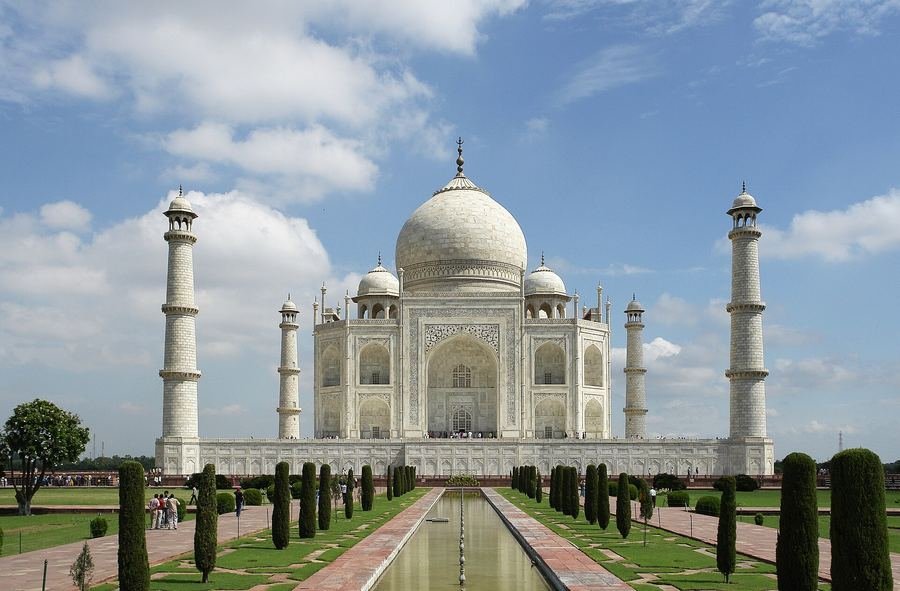
Few buildings on Earth are as instantly recognizable as the Taj Mahal. It's often called the world's greatest monument to love — and the true story behind it is moving enough that it doesn't need the myths that have grown up around it.
This guide covers the real history, the legends worth questioning, what you'll actually see inside, and the practical details that make or break a visit.
The Real Story
In 1631, Mumtaz Mahal, the beloved wife of the Mughal emperor Shah Jahan, died in childbirth. Grief-stricken, Shah Jahan commissioned a tomb for her in Agra, on the banks of the Yamuna River.
Construction ran for roughly two decades, with the main complex completed around 1653. Some 20,000 artisans are said to have worked on it, drawing on craftsmen from across India, Persia, and Central Asia. The result — white marble inlaid with semi-precious stones, set in a perfectly symmetrical garden — became the high point of Mughal architecture.
The story has a bittersweet ending. In 1658, Shah Jahan was overthrown by his son Aurangzeb and spent his final years confined in Agra Fort, from where he could see the Taj Mahal across the river. When he died in 1666, he was buried beside Mumtaz Mahal inside it.
The Taj Mahal was named a UNESCO World Heritage Site in 1983.
Myth vs. Reality
The "Black Taj"
One of the most repeated legends says Shah Jahan planned an identical Taj in black marble for himself, directly across the river, connected by a bridge. There's no solid historical evidence for it.
The site where it supposedly would have stood is Mehtab Bagh, a garden directly across the river from the Taj. Excavations there pointed to a garden designed for viewing the Taj — not the foundations of a second tomb. Today it's one of the best places to see the Taj at sunset.
The workers' severed hands
Another popular story claims Shah Jahan had the builders' hands cut off so they could never create anything as beautiful again. It's a dramatic tale, often told by guides, but there's no historical record to support it.
Inside the Mausoleum
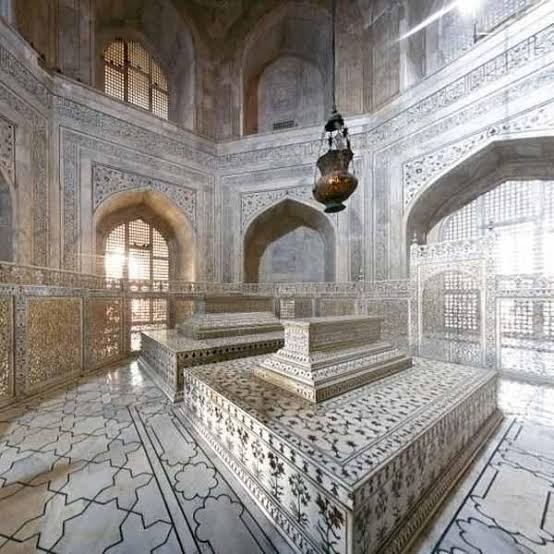
Inside the main chamber, beneath the great dome, an intricately carved marble screen surrounds two cenotaphs — memorial tombs for Mumtaz Mahal and Shah Jahan. Look closely and you'll see flowers inlaid in colored stone, a technique known as pietra dura.
Two details most visitors miss:
- These aren't the real graves. The actual tombs lie in a quieter chamber below, closed to the public. Islamic tradition discouraged elaborate decoration of graves, so the ornate versions sit above.
- Shah Jahan's tomb breaks the symmetry. Everything in the Taj Mahal is perfectly balanced — except his cenotaph, placed beside Mumtaz Mahal's at the center. It's one more reason historians doubt he ever planned a separate tomb.
Tip: Entering the main chamber needs an extra mausoleum ticket, and photography is not allowed inside. Shoe covers are provided at the steps.
Beyond the Tomb
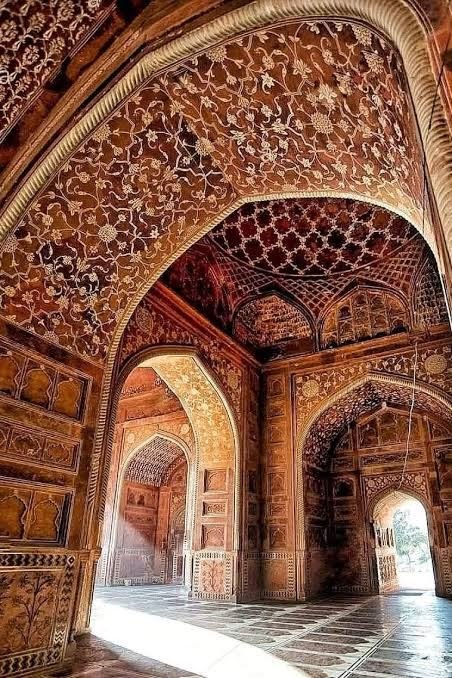
The white marble mausoleum gets all the attention, but it's flanked by two red sandstone buildings. On the west side is a working mosque; on the east is an identical twin, built mainly to keep the whole complex symmetrical. Step inside and look up — the painted floral decoration is some of the most beautiful work on the site.
When to Visit
The Taj Mahal changes color through the day — soft pink at dawn, bright white at midday, and warm gold in the late afternoon. Early morning is the best time to visit: the light is softer, the reflecting pool is calmer, and the crowds are thinner.

October to March brings the most comfortable weather. Summers in Agra are extremely hot, and the monsoon months bring heavy rain and haze. On a few nights around each full moon, a limited number of night-viewing tickets are also sold.
Tickets: What to Know
Entry tickets are issued by the Archaeological Survey of India (ASI), and the fee depends on your passport: foreign visitors, citizens of SAARC and BIMSTEC countries and Indian citizens each pay a different rate, and young children enter free. Check the current fees on the official Taj Mahal website before you go.
- Book online: an e-ticket lets you skip the ticket counter queue and walk straight to security.
- Add the mausoleum ticket: the main chamber with the cenotaphs needs a separate add-on ticket. It is worth it, and it is easiest to buy together with your entry ticket.
- Your visit is timed: a standard ticket covers a visit of about three hours, and staying much longer can mean paying again. Three hours is plenty for the mausoleum, the mosque and the gardens.
- Keep your ticket: it can reduce the entry fee at other Agra monuments on the same day, including Agra Fort.
Tours and Audio Guides
The links in this section are affiliate links. If you book through them, we may earn a small commission at no extra cost to you.
The entry ticket itself comes from the Archaeological Survey of India. Two add-ons can make the day easier:
- Guided day tour from Delhi: most visitors stay in Delhi, and a tour with round-trip transfer takes care of the long drive, the guide and the timing. Some tours also include Agra Fort or a sunrise visit; check what each one covers.
- Self-guided audio tour: if you go on your own, an in-app audio tour (about 1.5 hours, in English, works offline) tells the story as you walk the grounds. It does not include the entry ticket.
See Agra Day Tours from Delhi Get the Taj Mahal Audio Tour
Getting From Delhi to Agra
Most visitors base themselves in Delhi and see the Taj Mahal on a day trip. Agra is about 230 km away, and you have three practical options:
| Option | Time each way | Best for |
|---|---|---|
| Express train (Gatimaan Express, Vande Bharat) | About 1 hr 40 min to 2 hrs | Independent travelers who book seats a few days ahead |
| Car with driver via the Yamuna Expressway | About 3 to 4 hrs | Families and sunrise visits, since you leave on your own schedule |
| Guided day tour with transfer | About 3 to 4 hrs by road | First-time visitors who want transport, guide and timing handled |
The morning express trains reach Agra Cantonment station in time for a late-morning visit. For sunrise you need to leave Delhi around 3 a.m. by road, or spend the night in Agra. Hotels near the East Gate make a sunrise visit easy. If you would rather not organize it yourself, compare Agra day tours from Delhi; check whether each tour includes the entry and mausoleum tickets.
Best Viewpoints Beyond the Main Gate
- Mehtab Bagh: the garden across the Yamuna River, where the "Black Taj" was supposed to stand. It is the classic sunset view, with far fewer people.
- Agra Fort: look out from the Musamman Burj, the tower where Shah Jahan spent his last years with the Taj in view across the river.
- Rooftop cafes in Taj Ganj: the old streets south of the Taj have rooftops with a direct view of the dome, a relaxed spot for breakfast after a sunrise visit.
A Simple Sunrise Plan
- Before dawn: arrive at the East Gate about 30 to 45 minutes before opening with your e-ticket on your phone and a small bag only.
- First hour: head straight to the reflecting pool for photos while the light is pink and the paths are quiet.
- Next hour: visit the main chamber before the queue builds, then the mosque and its twin building.
- After the visit: breakfast on a Taj Ganj rooftop, then Agra Fort mid-morning.
- Late afternoon: Mehtab Bagh for the sunset view across the river.
Know Before You Go
- Closed on Fridays: The Taj Mahal closes to visitors every Friday; only worshippers attending prayers at the mosque are admitted.
- Opening hours: It opens 30 minutes before sunrise and closes 30 minutes before sunset.
- Use the East Gate at sunrise: It usually has shorter security lines early in the morning than the West Gate, where most tour buses arrive.
- Travel light: Security is strict. Large bags and food aren't allowed, so bring only the essentials.
- No re-entry: Once you leave, your ticket is used — so take your time inside.
- Getting there: Most visitors come from Delhi by express train or by road. See the Delhi to Agra options above.
Is the Taj Mahal Worth It?
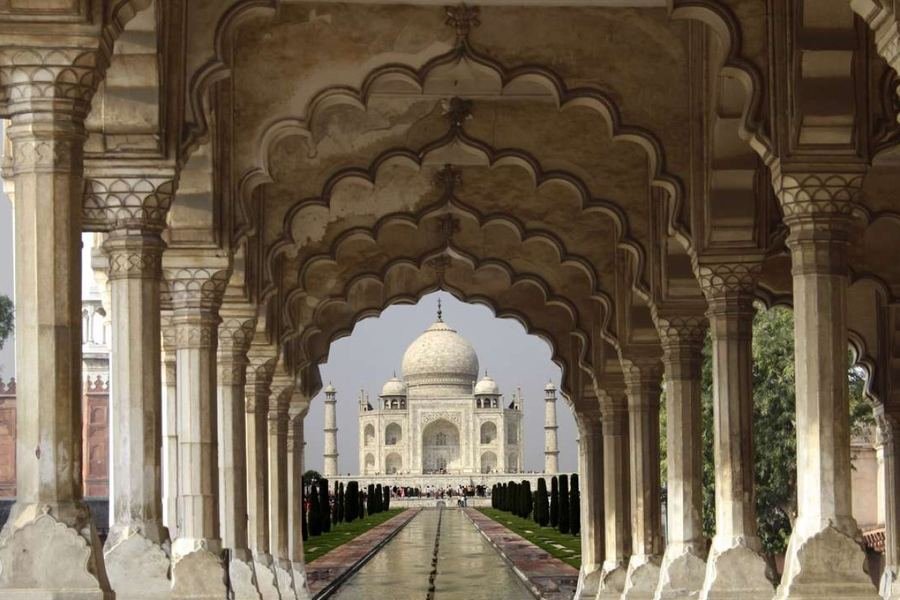
Absolutely. Go early, skip Fridays, buy the mausoleum ticket, and leave time to sit in the gardens — the building looks different every hour. It's one of the few world-famous sights that is even more impressive in person than in photos.
Planning more famous landmarks? See our guides to the Palace of Versailles and Bran Castle.
Taj Mahal FAQ
What day is the Taj Mahal closed?
The Taj Mahal is closed to visitors every Friday. Only worshippers attending prayers at the mosque are admitted on Fridays.
What is the best time to visit the Taj Mahal?
Sunrise is best: the light is soft, the crowds are thinner and the reflecting pool is calm. October to March has the most comfortable weather.
How long do you need at the Taj Mahal?
Two to three hours is enough to see the mausoleum, the mosque and the gardens. Standard tickets are timed for a visit of about three hours.
Is the mausoleum ticket worth it?
Yes. The add-on ticket lets you enter the main chamber to see the inlaid marble screen and the cenotaphs of Mumtaz Mahal and Shah Jahan.
Can you visit the Taj Mahal as a day trip from Delhi?
Yes. Express trains take under two hours each way, and the drive on the Yamuna Expressway takes about three to four hours. Guided day tours include transport.
Is the Black Taj Mahal real?
There is no solid evidence that a black marble twin was ever planned. Excavations at Mehtab Bagh across the river point to a garden designed for viewing the Taj.
Affiliate Disclosure: Some links in this guide are affiliate links to Tiqets and WeGoTrip. If you book through them, The Finer Route may earn a commission at no extra cost to you. Opening hours, rules and official prices can change, so check the official website before you go.