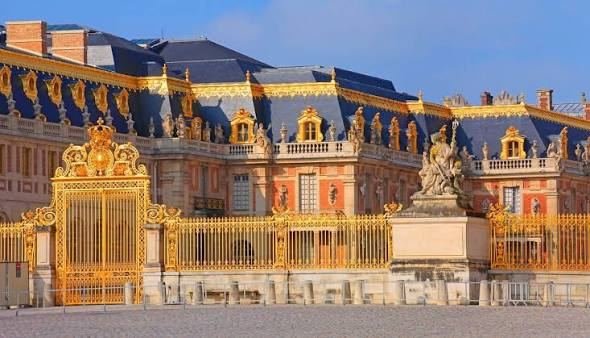
No palace in Europe is more famous, or more crowded, than Versailles. Every year millions of visitors make the trip from Paris to walk through the Hall of Mirrors and the royal gardens, and a surprising number of them arrive on the wrong day, with the wrong ticket, or at the worst possible time.
This guide covers the real history behind the palace, the myths worth ignoring, and the practical details that decide whether your visit feels magical or exhausting.
From Hunting Lodge to Seat of Power
Versailles began as a modest royal hunting lodge outside Paris. Louis XIV transformed it into the most lavish palace in Europe, and in 1682 he moved the royal court and the French government there.
The move was political as much as personal. By keeping France's most powerful nobles living at Versailles — competing for the king's attention through ceremony, fashion, and etiquette — Louis XIV kept them close and under his eye.
Three kings ruled from Versailles: Louis XIV, Louis XV, and Louis XVI. That era ended with the French Revolution, when the royal family was forced to leave for Paris in October 1789. In the 1830s, King Louis-Philippe turned the palace into a museum of French history, which is what you visit today.
The Hall of Mirrors
The Hall of Mirrors is the room everyone comes to see, and it lives up to the photos. Seventeen tall windows overlooking the gardens face seventeen arches lined with mirrors, under a painted ceiling celebrating the reign of Louis XIV.
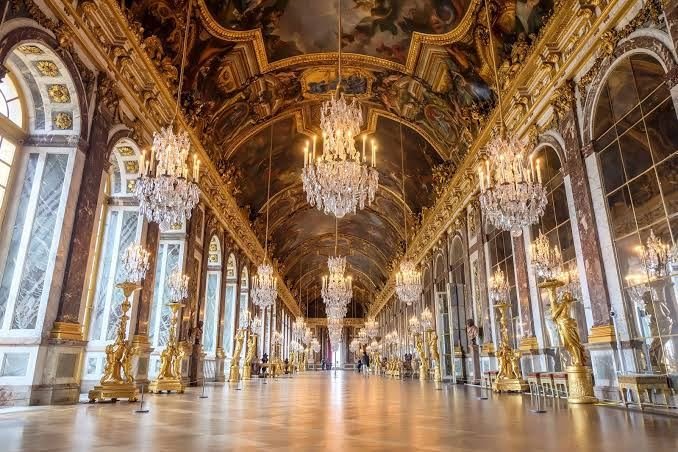
It wasn't just for show. The hall was used for royal celebrations and receptions, and on June 28, 1919, it was where the Treaty of Versailles was signed, formally ending World War I.
Tip: The Hall of Mirrors is busiest late morning. Enter the palace right at opening and you'll reach it before the tour groups do.
Myth vs. Reality: "Let Them Eat Cake"
Marie Antoinette, the last queen to live at Versailles, is famously quoted as saying "let them eat cake" when told the people had no bread. There's no evidence she ever said it.
A version of the line appears in the writings of the philosopher Jean-Jacques Rousseau, describing an unnamed "great princess" — written when Marie Antoinette was still a child in Austria. The quote stuck to her later, as public anger against the monarchy grew.
Marie Antoinette's Hamlet
One of the most surprising corners of the estate is the Queen's Hamlet: a small, deliberately rustic village with thatched cottages, a mill, and a working farm, built for Marie Antoinette in the 1780s. It was her escape from the strict ceremony of court life.
The Hamlet sits in the Estate of Trianon, a walk across the park from the main palace. Many visitors run out of time before reaching it, so plan for it if it's on your list.
The Gardens
The gardens are as much a part of Versailles as the palace itself. Designed by André Le Nôtre for Louis XIV, they stretch out from the palace in perfectly geometric terraces, fountains, and lawns, leading the eye all the way down the Grand Canal.
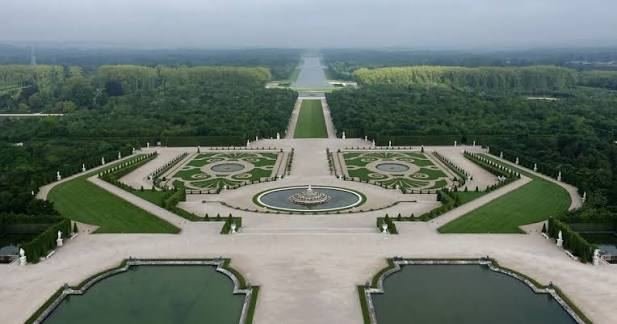
Just below the palace's south side is the Orangery garden, where hundreds of potted orange, lemon, and palm trees are set out in summer around swirling patterned lawns.
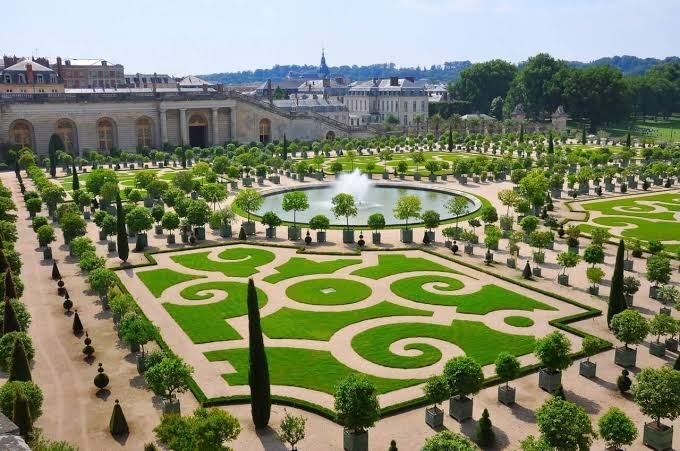
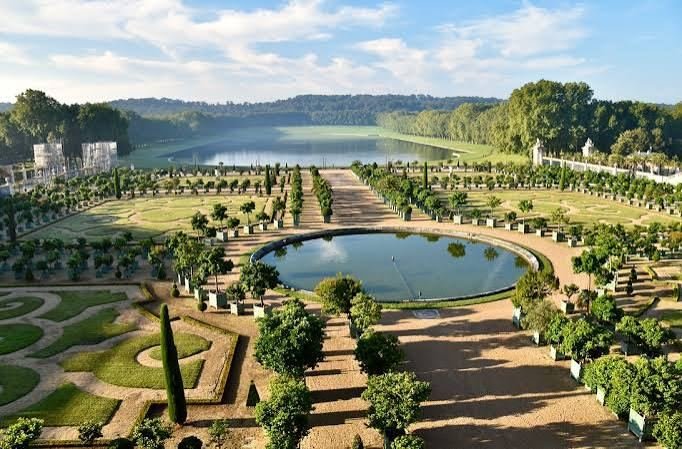
From spring through early November, the estate runs Musical Fountains and Musical Gardens shows, when the fountains play to Baroque music. On those days the gardens require a ticket; the rest of the year they're usually free to enter.
Tip: The park is huge. Bikes and small electric carts can be rented near the Grand Canal, and they save a lot of walking if you want to reach the Trianon Estate and the Hamlet.
Tickets: Which One Should You Buy?
Timed entry is required for the palace, so book online before you go. For most visitors, the Passport ticket is the right choice: it covers the palace with a timed entry, the Estate of Trianon (including the Hamlet), and the gardens.
| Ticket | What's Included | 2026 Price |
|---|---|---|
| Passport | Palace (timed entry), Estate of Trianon, gardens | €25 low season / €35 high season (April–October) |
| Estate of Trianon | Grand Trianon, Petit Trianon, Queen's Hamlet — no palace | €15 |
Prices and ticket types can change, so confirm on the official Palace of Versailles website before booking.
Guided Tours, Audio Tours and Combo Tickets
The links in this section are affiliate links. If you book through them, we may earn a small commission at no extra cost to you.
The official website is the cheapest place to buy a plain Passport ticket. Resellers usually cost more, so use them only if you want something extra:
- Tiqets: guided tours with priority entry, 2-day tickets, and combos that pair Versailles with Paris sights such as the Louvre.
- WeGoTrip: self-guided audio tours of the palace and gardens on your phone, sold with or without an entry ticket. Useful if you want the stories behind the rooms without following a group.
Compare Versailles Tours on Tiqets See Versailles Audio Tours
Know Before You Go
- Closed Mondays: The palace and Trianon Estate are closed every Monday, as well as January 1, May 1, and December 25. The gardens stay open.
- Avoid Tuesdays if you can: The Louvre is closed on Tuesdays, so many Paris visitors head to Versailles instead.
- Go early: The palace opens at 9:00 a.m. Visit the palace first, then spend the rest of the day in the gardens.
- Plan a full day: Seeing the palace, gardens, and Trianon Estate properly takes most of a day.
- Getting there: Take the RER C train from central Paris to Versailles Château–Rive Gauche (not Versailles-Chantiers), then walk about 10 minutes to the palace.
- Wear comfortable shoes: Between the palace floors and the park, you'll walk several miles.
Is Versailles Worth It?
Yes — as long as you plan it. Book a timed Passport ticket, avoid Mondays and Tuesdays, arrive at opening, and give it a full day. Do that, and Versailles is one of the most memorable day trips in Europe.
Love royal castles? Read our guide to Bran Castle in Transylvania, the real history behind "Dracula's Castle."
Affiliate Disclosure: Some links in this guide are affiliate links to Tiqets and WeGoTrip. If you book through them, The Finer Route may earn a commission at no extra cost to you. Opening hours, rules and official prices can change, so check the official website before you go.